
Calgary Gold Buyers sees the same question every week: what do the karat stamps on gold jewellery actually mean? A tiny mark inside a ring band or on a clasp tells you the purity of the metal. Once you can read it, you know what you own before anyone else looks at it. This guide explains the common stamps, the odd ones, and what to do when a piece has no mark at all.
Why Karat Stamps on Gold Jewellery Matter
Pure gold is very soft. Jewellers mix it with metals such as copper, silver, or zinc so a ring can survive daily wear. The karat number tells you what share of the piece is gold and what share is alloy.
Pure gold is 24 karat (24K). A piece marked 18K is 18 parts gold out of 24, which is 75 percent. A piece marked 14K is 14 parts out of 24, or about 58.3 percent. These fractions are fixed by arithmetic, not by opinion.
Because purity drives the gold content of a piece, the stamp is the first thing an assessor checks. It does not replace testing, but it tells everyone where to start. Learning to read karat stamps on gold jewellery also helps you spot pieces that deserve a closer look before you sort them.
The Common Karat Marks and What They Mean
Most jewellery sold in Canada carries one of a handful of marks. You may see the karat written as "14K" or "14KT", or as a number of parts per thousand such as "585". Both systems describe the same thing.
| Stamp | Gold content | Typical use |
|---|---|---|
| 10K or 417 | About 41.7% | Everyday rings, class rings, chains |
| 14K or 585 | About 58.3% | Wedding bands, pendants, bracelets |
| 18K or 750 | 75% | Fine jewellery, European pieces |
| 22K or 916 | About 91.6% | Traditional and imported jewellery |
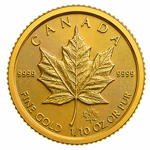
| 24K or 999 | 99.9% or higher | Bullion bars and coins |
Keep this table handy when you sort through a jewellery box. It turns a confusing pile of marks into a short list of purity levels. Most of the karat stamps on gold jewellery you find at home will fall into one of these five rows.
How to Read Karat Stamps on Gold Jewellery
Stamps are small, so you need good light and some magnification. Take your time, because a rushed look often misses a faint mark. A basic jeweller’s loupe or the macro mode on a phone camera works well. Wipe the piece with a soft cloth first, because grime can hide shallow marks.
Look in these places:
- The inside of a ring band
- The clasp or jump ring of a necklace or bracelet
- The back of a pendant or brooch
- The post or back of an earring
- The tail tag on a chain
Read the whole mark, not just the number. A stamp may include a maker’s symbol, a country code, or a trademark. The maker’s mark tells you who stood behind the purity claim. If you find two stamps that disagree, such as 14K next to 585 on one piece, note both and ask an assessor to check them.
Marks That Cause Confusion
Some stamps look like gold marks but describe something else. These are the ones that cause the most trouble when people sort their jewellery.
Gold-filled, plated, and electroplated marks
Marks such as "GF", "GP", "GEP", "HGE", and "RGP" describe a thin layer of gold bonded to a base metal. The piece is not solid gold, and very little of the weight is actual gold. A stamp like "1/20 12K GF" means a layer of 12K gold makes up one-twentieth of the total weight.
Numbers without a K
A stamp reading "585" or "750" is a purity mark in parts per thousand. A stamp reading "925" points to sterling silver, not gold. Mixing up those numbers is a common mistake.
Worn or missing stamps
Years of wear can polish a stamp away, and resizing a ring can cut it off. A missing mark does not mean the piece is fake. It only means the purity needs to be confirmed another way.
What Canadian Rules Say About Marking
In Canada, the Precious Metals Marking Act sets rules for how items marked with a gold quality must be described. The Act covers quality marks and the trademark that shows who applied them. If you want to read the rules yourself, the full text is on the Precious Metals Marking Act page of the Justice Laws website.
The Act matters because a mark is a claim. A stamp on a modern Canadian piece should match what is inside it. Older imported pieces, estate jewellery, and items from other countries may follow different traditions, so a stamp alone never closes the question.
When a Stamp Needs Confirming
A stamp tells you what the maker claimed. Testing tells you what the metal actually is. Both matter when you plan to sell, and each answers a different question. The stamp gives you a starting point, while testing confirms the purity with evidence.
Consider confirmation in these situations:
- The stamp is faint, doubled, or hard to read
- The piece feels lighter or heavier than similar items
- The colour looks unusual for the stamped karat
- The piece has no maker’s mark at all
- It came from an estate, a trip abroad, or an old family box
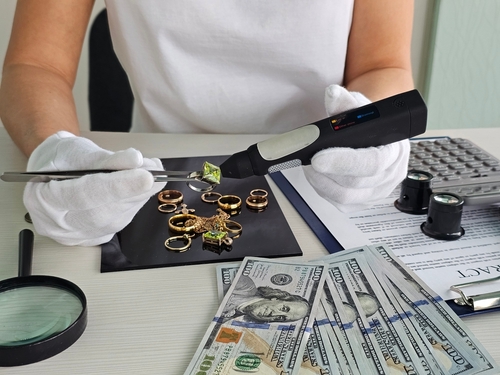
At our shop, an assessor checks the stamp, weighs the piece, and tests the metal in front of you. Our article on what happens during a gold appraisal in Calgary shops walks through that process step by step.
Putting Your Pieces in Order Before You Visit
A little preparation makes the visit faster and clearer. Spend ten minutes sorting before you come in, and write down any stamp you cannot read so you can point it out.
1. Group pieces by the stamp you can read, such as 10K, 14K, and 18K.
2. Set aside pieces with no mark or a mark you cannot read.
3. Keep pieces with plated or filled marks in their own pile.
4. Leave any stones in place. Do not try to pry them out.
5. Bring photo ID and any paperwork you still have.
Our guide to the documents you need to sell gold in Calgary lists what to bring. You can also read about the full range of gold buying services in Calgary if you want to see what we accept. Any quote is given after the assessment, not before.
Frequently Asked Questions
Does a higher karat number always mean a better piece of jewellery?
Not always. A higher karat means more gold content, but it also means a softer metal. Many people prefer 14K for rings because it resists scratches better than 18K or 22K.
Can a stamp be faked?
Yes. A stamp is a marking, and anyone can stamp a mark on a base metal piece. That is why a stamp should be confirmed by testing before you rely on it.
What does a stamp like 925 on a gold-coloured piece mean?
It usually means sterling silver, which may have a gold-coloured finish. Gold-coloured plating over silver is sometimes called vermeil. Ask an assessor to confirm what the base metal is.
Do I need to clean my jewellery before bringing it in?
No. A light wipe helps you read the stamp, but you should not use polish or harsh chemicals. Aggressive cleaning can damage delicate or antique pieces.
Visit Calgary Gold Buyers
Bring your jewellery to either of our Calgary locations, or call before you come.
- Phone: (403) 630-4653
- SW location: 5940 Macleod Trail SW, Suite 500, Calgary, AB T2H 2G4
- NW location: 1026 16th Ave NW, Suite 203, Calgary, AB T2M 0K6
- Hours: Monday to Saturday, 9:30 am to 5:00 pm. Sunday by appointment only.
You can also use our contact page to send details ahead of your visit.